


Baseline Sound Monitoring at Grant-Kohrs Ranch National Historic Site
Web Accessibility - Legacy Page
This page has been identified as older than June 1, 2014. Per MSU's Web Accessibility agreement with the Office for Civil Rights, content that has not been updated since this date is considered "legacy" and does not need accessibility errors remediated.
If you make edits to this page and republish it, you will need to correct any accessibility errors that exist - all MSU web pages created or updated past June 1, 2014 are required to meet our current Web Accessibility standards. Visit our help center article on working with legacy web pages and content for more information.

Summary
Grant-Kohrs Ranch National Historic Site (GRKO), located just north of Deer Lodge, Montana, is a working cattle ranch commemorating the heritage of cowboys, stock growers, and cattlemen in the history of the American West during the 19th and 20th centuries.
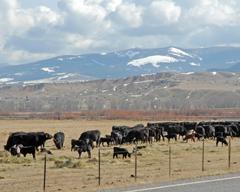
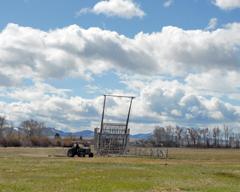
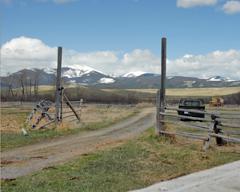
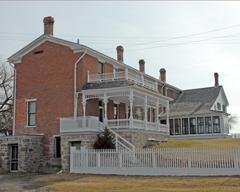
Click on an image to view as a slideshow.
Montana State University and GRKO staff implemented a year-long acoustical study of the natural, cultural, and community sounds that comprise the ambient acoustic environment of the historic site.
The audio measurements will establish an acoustic "baseline" to help park managers understand the seasonal variation in sounds at the ranch due to wildlife, livestock, ranch operations, and ranch visitors. The audio measurements will also help assess the level of noise attributable to external sound sources in the vicinity of the historic site, such as highway traffic, aircraft, and recreational activities, and the potential impact of community growth on the acoustical integrity of the visitors' experience.
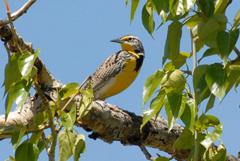
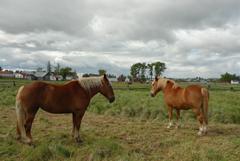
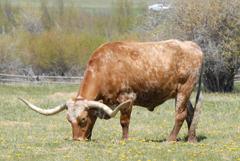
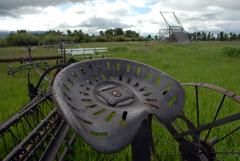
Click on an image to view as a slideshow.
Background
The Grant-Kohrs Ranch was established to provide an understanding of the frontier cattle era. Congress believed the best format for visitor understanding was to maintain the site as a working ranch, with all the sights, sounds, and sensations associated with ranching. Thus, the cultural soundscape associated with the working ranch is essential to visitor enjoyment and understanding. The sounds of a working ranch (bulls bellowing, draft horses pulling haying equipment, the blacksmith sharpening sickle mower blades, etc.) help immerse visitors in the historic time period the park exists to preserve.
The National Park Service Management Policies 2006 include several sections specifically addressing natural and cultural sound resources within park units.
- Section 4.9: Soundscape Management (Excerpt: "The Service will restore to the natural condition wherever possible those park soundscapes that have become degraded by unnatural sounds (noise), and will protect natural soundscapes from unacceptable impacts.")
http://www.nps.gov/policy/mp/policies.html#_Toc157232745
- Section 5.3.1.7: Cultural Soundscape Management (Excerpt: "The Service will preserve soundscape resources and values of the parks to the greatest extent possible to protect opportunities for appropriate transmission of cultural and historic sounds that are fundamental components of the purposes and values for which the parks were established.")
http://www.nps.gov/policy/mp/policies.html#CulturalSoundscapeManagement5317
Up until now, GRKO had no data characterizing the natural and cultural sounds of the park. Several anticipated changes in the neighboring community of Deer Lodge may affect the visitor experience at GRKO. The Deer Lodge airport, located 1.5 miles southwest of the GRKO Visitor Center, is expanding its general aviation operations, for which there is limited FAA monitoring. Highway traffic noise associated with the I-90 freeway is also increasing. The I-90 corridor runs north-south adjacent to the city of Deer Lodge, passing within 0.7 of a mile of the GRKO Visitor Center. An additional impact may come from the considerable noise associated with the potential establishment of a rifle range in the vicinity of the ranch. Although some sounds from the community surrounding the park unit may not affect resources or interfere with visitor experience, substantial increases in community noise potentially threaten the integrity of the ranch's cultural soundscape.
Example audio
Listening Hints:
You will probably need to adjust the playback volume to hear some of the subtle sounds
in the recordings.
Some of the recordings contain low frequency sounds, so it may be best to listen with
larger speakers or good headphones to get the full effect.
-
MP3_File March 18, 2009 (9:34PM MDT): 45 second excerpt
A still evening on the ranch, but highway traffic is audible...
-
MP3_File April 1, 2009 (9:53PM MDT): 2 minute excerpt
Distant highway traffic, then a high altitude jet aircraft passes over the ranch.
-
MP3_File April 15, 2009 (6:13AM MDT--civil twilight): 1 minute excerpt
The sun won't be up for 30 minutes, but the sky is starting to get light. Listen for the wind, distant highway noise, a duck, a dog barking, a persistent rooster, a sandhill crane, and some other birds. Do you recognize any other sounds?
-
MP3_File May 1, 2009 (11:22AM MDT): 5 minute excerpt
Listen for the sound of a horse grazing in the grass, a fly buzzes by, birds call in the background , and then a train passes by on the tracks that cross the ranch (at 01:34, just before the first train whistle, listen carefully for a rooster!). As the train passes, hear a "snort" by the grazing horse (at 03:30).
-
MP3_File May 1, 2009 (11:33AM MDT): 30 second excerpt
A few quiet bird calls, then a louder call: is it a visiting seagull? Listen for a dog barking in the distance.
-
MP3_File May 4, 2009 (6:23AM MDT): 2 minute 30 second excerpt
Shortly after daybreak: how many birds can you identify in this elaborate "dawn chorus"? Do you hear any human-caused sounds?
-
MP3_File July 6, 2009 (about noon MDT)): 6 minute 30 second excerpt
A train and a thunderstorm approach the site. Listen for the birds and horses. When do you hear the first raindrops?
-
MP3_File July 6, 2009 (3:00PM MDT): 2 minute excerpt
Some sort of ranch implement: do you hear horses pulling it?.
-
MP3_File December 30, 2009 (9:30PM MST): 2 minute 30 second excerpt
Some coyotes visit the ranch and make their presence known.
-
256MB MP3_File (slightly over 9 hours) Example from April 1, 2009, starting at 4:15AM.
Plan
GRKO is now working with Montana State University (MSU) and the National Park Service Natural Sounds Program Office (NSPO) to perform a long-term (12 month) assessment of the characteristic seasonal and diurnal soundscape at a site located approximately 200 meters west-southwest of the historic Ranch House complex, situated between the Visitor Center and the Clark Fork River (see Figures 1 and 2).

Figure 1: GRKO ranch orientation detail.
The baseline data will be archived, analyzed, and documented as described more clearly in Scope of Work, Tasks 1-5 (below) for use by GRKO staff in support of the 2006 Management Policies for natural and cultural soundscapes. The data will be made available for GRKO visitor programs and educational purposes, for automated sound source analysis work by MSU, and for future studies conducted by the NSPO.

Figure 2: GRKO ranch and neighboring community.
Automated acoustic instruments provided by the NSPO collected the bulk of the data (see Figure 3). The automatic acoustical data collection occurred 24 hours per day, beginning March 17, 2009, and concluding on March 19, 2010. The data includes calibrated sound pressure level measurements obtained once per second in 33 frequency bands (1/3rd octave Leq). The sound level measurements were obtained by calibrated equipment with ANSI Type 1 certification (e.g., Larson Davis 831). At the same time, calibrated digital audio (MP3) recordings were collected continuously, and wind speed and temperature measurements were logged automatically every 10 seconds.

Figure 3: Acoustical monitoring site equipment.
Data collection and preliminary analysis
- The sound pressure level (SPL) data is processed via automatic software to determine statistics regarding the maximum and minimum SPL measurements, the number of intervals exceeding each 1dB increment, and similar quantitative information.
- The continuous audio MP3 recordings are segmented into 24 hour chunks, then processed with automatic software to identify specific sonic events where the amplitude exceeds a predetermined threshold. The identified events will be examined with short-time Fourier transform (STFT) analysis to reveal the spectro-temporal characteristics of the sounds present in the recording.
- Several one-day (24 hours) segments of audio will be selected for aural analysis. MSU staff will listen to regular segments of the entire 24 hour recording by auditioning 10 seconds of audio taken every 2 minutes, manually documenting any recognizable sonic events such as ranch vehicle traffic, biological sounds, aircraft overflights, etc. 10 seconds of audio every 2 minutes comprises 720 sample segments, or two hours of extracted audio. The two hours of audio excerpts will be supplemented by additional listening of segments deemed to be interesting by the 10 second samples or by the STFT analysis.
- Wind speed and temperature data will be processed similarly to the SPL data.
- Finally, the various measurements will be correlated informally to see what might be the best way to summarize the data in graphical and aural form.
Read more about it
- [pdf] R.C. Maher, "Final Report: Baseline Sound Monitoring at Grant Kohrs Ranch National Historic Site," project report prepared for Grant Kohrs Ranch NHS, Deer Lodge, MT, 181 pages, September 7, 2012.
- [pdf] R.C. Maher and J. Studniarz, "Automatic search and classification of sound sources in long-term surveillance recordings," Proc. Audio Engineering Society 46th Conference, Audio Forensics—Recording, Recovery, Analysis, and Interpretation, Denver, CO, June 2012.
- [pdf presentation] R.C. Maher and Christine Ford, "Soundscape collaboration for science, management, and public outreach at a national historic site," invited paper, J. Acoust. Soc. Am., vol. 130, no. 4, part 2, p. 2497 (abstract), October, 2011.
- [pdf presentation] R.C. Maher, "Automated analysis and interpretation of long-term soundscape audio recordings," invited paper, J. Acoust. Soc. Am., vol. 129, no. 4, part 2, p. 2570 (abstract), April, 2011.
- [pdf] [pdf presentation] R.C. Maher, "Maintaining sonic texture with time scale compression by a factor of 100 or more," Preprint 8250, Proc. 129th Audio Engineering Society Convention, San Francisco, CA, November, 2010.
- [pdf presentation] R.C. Maher, "Cultural soundscape of the Grant-Kohrs Ranch national historic site," J. Acoust. Soc. Am., vol. 127, no. 3, part 2, p. 1745 (abstract), 2010.
- [pdf] R.C. Maher, "Acoustics of national parks and historic sites: the 8,760 hour MP3 file," Preprint 7893, Proc. 127th Audio Engineering Society Convention, New York, NY, October, 2009.
- [pdf presentation] R.C. Maher, "Baseline sound monitoring plan for Grant-Kohrs Ranch national historic site," J. Acoust. Soc. Am., vol. 125, no. 4, part 2, p. 2716 (abstract), 2009.
- [pdf] R.C. Maher, J. Gregoire, and Z. Chen, "Acoustical monitoring research for national parks and wilderness areas," Preprint 6609, Proc. 119th Audio Engineering Society Convention, New York, NY, October, 2005.
For more information, contact:
Rob Maher
Professor and Department Head
Electrical & Computer Engineering
Montana State University
610 Cobleigh Hall
Bozeman, MT 59717-3780
[email protected]